PBS
Polybutylene Succinate
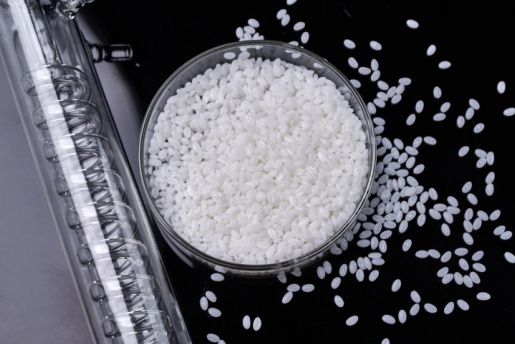
PBS (Polybutylene Succinate) is a semi-crystalline aliphatic biodegradable polyester produced by the polycondensation of succinic acid and 1,4-butanediol. It offers excellent biodegradability, outstanding overall performance, diverse processing methods and a wide range of applications, making it one of the most promising green, low-carbon, and environmentally friendly polymer materials. PBS is categorized as petroleum-based, semi-biobased, and fully biobased, depending on the source of its raw materials.
 Consult
Main Characteristics
Excellent Biodegradability:
PBS can be decomposed by enzymes secreted by microorganisms (bacteria, fungi, etc.) under natural conditions or in composting conditions (industrial composting, home composting, etc.), ultimately producing carbon dioxide and water, without causing any environmental pollution.
Excellent overall performance:
High heat deflection temperature:
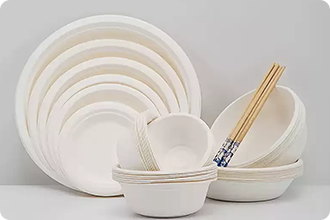
PBS has a heat deflection temperature approaching 100°C, significantly higher than PLA (approximately 55°C) and PBAT (approximately 60°C). PBS products (such as lunch boxes and straws) can withstand higher temperatures without softening or deforming.
Excellent mechanical properties:
It possesses both strength and rigidity, as well as good toughness and impact resistance, placing its performance between that of PE and PP, making it a suitable replacement for some PE and PP materials.
Excellent processing properties:
PBS possesses excellent fluidity and compatibility, making it easily blended and modified with other biodegradable materials. It can be molded by almost all existing PP and PE processing methods, and the molding process is fast.
Safety:
PBS complies with food contact material safety standards and can be used in food contact materials. PBS is non-toxic and can be used in biomedical materials. Its degradation products are harmless to humans and the environment.